
Articles By Dan Schell, Chief Editor
DAN SCHELL ARTICLES

What I Heard When I Crashed Three ING Dive Teams
After attending three Innovation Network Gathering Dive Teams, Chief Editor Dan Schell shares what he heard about accelerating study startup, rethinking investigator meetings, and leading through AI adoption—along with a reminder that promising ideas still need stakeholder support, measurable evidence, and practical execution.
Continue Reading..
Can We Make Feasibility More Realistic?
Drawn from a Clinical Leader Live webinar, this article explores how sponsors can make clinical trial feasibility and enrollment forecasts more realistic by questioning data sources, examining patient and site burdens, challenging protocol assumptions, and looking beyond seemingly convincing answers from historical data and AI.
Continue Reading..

With CROs, Decide What You Can Actually Manage
Industry veteran Peter Fredette explores how small biotechs can rethink CRO outsourcing by balancing cost, operational needs, and internal oversight. Before choosing a CRO model, sponsors must honestly assess which services they need — and how many partners they can realistically manage.
Continue Reading..
Small Biotech Can Outsource The Work, But Not The Thinking
Robert Goldman explains why small biotechs can outsource clinical trial work—but never accountability. His advice on CRO oversight and responsible AI adoption shows how lean sponsors can gain efficiency without surrendering the judgment needed to spot risks and protect their programs.
Continue Reading..

Before Adding AI, Fix The Process
Regeneron’s Kaniel Cassady argues that “doing more with less” in clinical development should start with questioning existing processes, unnecessary data collection, and outdated workflows before turning to AI and other new technologies.
Continue Reading..
Why ING Feels Different
I’ve attended enough clinical trial conferences to know how similar they can feel. ING is different. Its Dive Teams, WhaleTank, and candid conversations are designed to get attendees participating, not just listening. This year, I’m especially interested in an off-the-record regulatory panel that could tackle some of the biggest changes facing clinical research.
Continue Reading..

What SIP Gets Right And Where It Still Falls Short
SIP users Sophie Haynes and Vicki Alvarez identify features that provide value but question whether the platform eliminates enough work to justify its setup demands, repetitive processes, and usability challenges.
Continue Reading..

The SIP Problem Is Bigger Than SIP
Sites continue to struggle with duplicated administrative work across too many sponsor and CRO systems. Current SIP users cite real frustrations with the platform, but their experiences also suggest the original goal of a shared, standardized site-information system remains highly relevant.
Continue Reading..

Building SIP Was The Hard Part
Charlie Semenchuk and Jeff Ventimiglia helped turn the ambitious vision for the Shared Investigator Platform into reality. They look back at SIP’s technical challenges, competing stakeholder needs, site burden, and what the experience can still teach an industry wrestling with many of the same problems today.
Continue Reading..

The Big Idea Behind The Creation Of SIP
Jackie Kent, Lisa Moneymaker, and Jeanette Teague were among the early architects of the Shared Investigator Platform (SIP). In part one of this four-part series, they discuss SIP’s ambitious origins, the challenges of getting competing sponsors to collaborate, and why broad adoption was critical to delivering on its promise of reducing site burden.
Continue Reading..

Rebecca Jackson: EHR-To-EDC Needs A Reality Check
Rebecca Jackson offers a candid reality check on EHR-to-EDC integration, AI, and clinical trial technology, arguing that innovation must solve real operational problems — not create new ones.
Continue Reading..

The Rare Trials Summit Wants To Produce More Than Conversation
The Rare Trials Summit returns to Boston this September with a mission that extends beyond traditional conference presentations. Through interactive workshops and working groups focused on regulatory guidance and pediatric trials, organizers hope to produce practical solutions that help advance rare disease clinical research.
Continue Reading..

When One Trial Leads To Rethinking Them All
A chance observation during the COVID-19 pandemic led physician-scientist Dan Nicolau to question one of clinical research's oldest assumptions. I spoke with Nicolau about the trial that changed his perspective and why he believes continuous trial analytics could reshape the future of clinical development.
Continue Reading..
From The Lab To Regulations As An IRB Specialist
In this 8-question Q&A, Ribu Goyal, an IRB specialist and scientific reviewer at the Mayo Clinic Office for Human Research Protection, talks about everything from the details of her job to how sponsors could improve their collaboration with their IRBs.
Continue Reading..
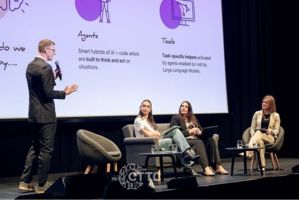
A Role-Play Conference Session That Reframes The Data Manager's Job
A theatrical skit at the Clinical Trials Technology Congress (CTTC) in London imagined clinical data managers working alongside specialized AI agents by 2030. But the real takeaway wasn't about the technology. It was about how much of today's data manager role is work that shouldn't exist in the first place.
Continue Reading..

CTTC Opens With A Reality Check On AI
I expected the Clinical Trials Technology Congress opening plenary to focus on AI's latest capabilities. Instead, speakers challenged attendees to think about the harder work that comes first: connecting data, redesigning workflows, and helping people embrace new ways of working. It was a refreshing reality check on what AI adoption really requires.
Continue Reading..

Why "Steady Evolution" Best Describes AI's Future
I hosted a panel of clinical development veterans to separate AI hype from reality. Their message was clear: AI will change clinical trials, but success will depend less on the technology itself than on adoption, culture, and realistic expectations.
Continue Reading..

Where Are We With Clinical Trial Tokenization?
In January 2024, I interviewed Tom Dougherty about a topic many clinical research professionals had heard mentioned but few could confidently explain: tokenization. I wanted to get caught up on any progress that has been made, so I completed this Q&A with Dougherty, who is Real-World Data Strategy Director, CMR - Clinical Data Science & Evidence at Novo Nordisk.
Continue Reading..

What ClinOps Gets Wrong About Pediatric Trials
Pediatric cancer advocates Brian Burkhardt and Andy Shepperd believe clinical research still confuses retention with relationships. Their lessons on trust, community, and patient support offer valuable insights for clinical operations teams across every therapeutic area.
Continue Reading..

3 Views From Inside FDA's RTCT Pilot
The FDA's RTCT pilot promises to bring clinical trials into the real-time era, but questions remain about governance, oversight, and implementation. We asked three organizations participating in the initiative what they see as the opportunities, challenges, and realities behind the FDA's most ambitious modernization effort in years.
Continue Reading..
The Patient Recruitment Debate Nobody's Having
A conversation with patient recruitment consultant Paul Ivsen turns into something much bigger: a candid look at why recruitment vendors all sound alike, why sponsors still struggle to evaluate them, and why the industry avoids debating what actually works.
Continue Reading..
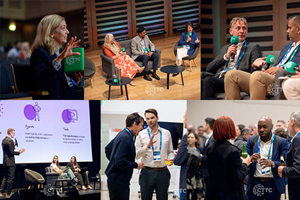
My View: The Clinical Trials Technology Congress
I attended the inaugural Clinical Trials Technology Congress in London expecting to hear plenty about AI, digital tools, and the future of clinical trials. What stood out instead was how many speakers focused on a much more immediate issue: reducing complexity for sites, patients, and study teams.
Continue Reading..
Can Independent Pharmacies Succeed Where Walgreens Failed?
Josh Rose, CEO of Hawthorne Health, believes independent community pharmacies may succeed where large retail chains struggled in clinical research. In this interview, Rose explains how Hawthorne is building pharmacy-based trial sites focused on underserved communities, chronic disease studies, and trusted patient relationships.
Continue Reading..
Why Site Engagement Isn't Just A Role Anymore
GSK’s Laura O'Donnell says site engagement is no longer just a function or team, it’s an organization-wide capability. In this article, she discusses why the traditional CRA relationship model has broken down, how sponsors are using data and AI to better support sites, and why human connection still matters in an increasingly automated clinical trial environment.
Continue Reading..
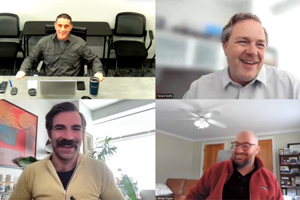
Collaboration Isn't Sexy. That's Kind of the Point.
SCRS’s Collaborate Forward playbook isn’t about reinventing clinical trials; it’s about fixing how people work together. Based on real-world examples, the initiative shows how small, practical changes in collaboration are already improving study startup, site relationships, and operational performance.
Continue Reading..

From Hint To Headline: FOMAT Acquires Site Network
FOMAT Medical CEO, Nick Focil, talks about the company’s acquisition of site network Topography Health — a deal that expands FOMAT’s national footprint and reflects a broader trend of site network growth aimed at scaling access, data, and operational reach.
Continue Reading..
The Industry Talks Access — Fabian Sandoval Builds It
Fabian Sandoval is redefining what a clinical research site looks like — building trust through community partnerships, media, and education to improve trial access and awareness long before enrollment begins.
Continue Reading..

The Rise — And Stall — Of Retail Pharmacy Clinical Trials
As rumors swirl that Walgreens may be reassessing its clinical trials business, this article explores a broader trend: why major retail pharmacy chains like CVS, Walmart, and Kroger have struggled to make the model work at scale.
Continue Reading..

Clinical Trials Have A Native American Problem
Kelsey Powell is working to close a long-standing gap in clinical trials: the lack of participation from Native American communities. Her experience highlights how issues of trust, awareness, and fragmented systems continue to limit access — and what it will take to change that.
Continue Reading..
RBQM And Centralized Monitoring Need Action
After COVID forced sponsors to move faster than ever, many are now confronting a harder challenge: ownership. Marci Thear explains why RBQM and centralized monitoring only work when sponsors move beyond reviewing outputs and start acting on the signals.
Continue Reading..

Dan Schell
Click here to e-mail Dan
Since 2024, Dan Schell has been Chief Editor of Clinical Leader, a website focused on topics related to clinical trial operations. He also hosts multiple Clinical Leader Live webinars each year on topics such as AI use in clinical trials, regulatory shifts in clinical research, and diversity in patient recruitment. Previously, he served as the Editorial Director of Life Science Leader magazine, another Life Science Connect community, for 14 years. He has experience as a technology writer and worked for 10 years in hospital business development and communications.